
Healthy diets are a vital part of a healthy lifestyle. They support overall health and provide essential nutrients. They not only maintain health but also lower the risk of developing chronic diseases. A diet that is too high in fats, sugars, and salt is unhealthy. Global initiatives are becoming more focused on improving food systems and changing the choices people make to have sustainable healthy diets.
The food based dietary guidelines (also known as healthy foods guides) provide guidance to consumers about how to eat a wide range of foods. These guidelines are intended to prevent chronic diseases like diabetes and heart disease. A healthy diet should provide enough food energy and liquid, fibre, proteins, and vitamins. It is vital to avoid eating unhealthy foods and to eat nutritious food.
Healthy diets can be promoted by governments through nutrition programs and policies. Some programs aim to integrate healthy diets into the safety net programs via cash-transfer or counseling. Other programs focus on new crop varieties and raising awareness among consumers about the nutritional content of food. This article discusses the key issues and challenges that lower-income countries face when trying to promote healthy diets.

Lower-income countries have the highest rates of underweight and under-nutrition. A lack of nutritious food access may be one reason why unhealthy diets are so common. There is also evidence that knowledge and preferences are factors contributing to unhealthy diets. Diet-related mortality rates can be improved by focusing on nutrition through food-based dietary guidance.
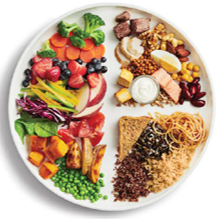
The food pyramid is one of many graphic representations of healthy eating habits. The pyramid's purpose is to encourage healthy eating habits by allowing people to eat a wide variety of foods. The nutritional recommendations for adults are fairly similar, but the nutritional needs for children may differ.
Globally fruit and vegetable intakes are about 60% lower than the recommended intake. Africa's average fruit and veggie intake is just 59.5% below the recommended intake. Meanwhile, the consumption of protein-rich foods, such as dairy and meat, is within recommended ranges.
Affordable healthy diets are essential for low-income families. Policy measures are needed to increase access to affordable, nutritious food on the market. The number of people who cannot afford a healthy diet is on the rise in many regions.
According to a report released by the Commission on Sustainable Food Production, 12 million preventable deaths can be attributed to poor diets in 2018. This figure is in addition to the 26%+ adult deaths due to poor diets.
Despite the rise of preventable deaths, few improvements have been made to diets over this decade. While the world's population has grown by an average of 10% over the same period, the number of avoidable death from diet has increased by more than twice as much.
FAQ
What is the difference among a virus or bacterium and what are their differences?
A virus is an organism microscopic that can't reproduce outside its host cells. A bacterium is a single-celled organism that reproduces by splitting itself in two. Viruses can be as small as 20 nanometers, while bacteria can grow up to 1 micron.
Viruses spread easily through contact with bodily fluids infected, including saliva and urine, semen, vaginal secretions or pus. Bacteria is usually spread directly from surfaces or objects contaminated with bacteria.
Viruses can enter our bodies through cuts, scrapes, bites, or other breaks in the skin. They can also be transmitted through the eyes, nose, mouth, ears, vaginal, rectum, and anus.
Bacteria may enter our bodies through cuts and scrapes on our skin, burns, insect bites, and other wounds. They may also be introduced into our bodies through food and water as well as soil, dirt, dust, and animals.
Both viruses and bacteria can cause illness. However, viruses cannot reproduce within their hosts. So they only cause illnesses when they infect living cells.
Bacteria can multiply within their hosts and cause illness. They can even invade other parts of the body. That's why we need antibiotics to kill them.
What is the ideal weight for my height? BMI calculator & chart
Use a BMI calculator to determine how much weight is needed to lose. A healthy BMI range is between 18.5 and 24.9. Aim to lose 10 pounds per month if your goal is to lose weight. Enter your height and weight to calculate your BMI.
This BMI chart can help you find out if or not you are obese.
Which lifestyle is best for your health?
Living a healthy lifestyle is one that encourages you to eat well, exercise regularly, get enough sleep, and avoids stress. You can live a long and healthy lifestyle if these guidelines are followed.
Starting small can make a big difference in your diet, and even your exercise routine. You can lose weight by walking 30 minutes each day if you are looking to lose weight. If you're looking for a way to increase your activity, consider taking up swimming or dancing. An online fitness program, such as Strava and Fitbit, can help you track your activity.
What is the best food for me?
The best diet for you depends on several factors, like your age, gender, weight, health conditions, and lifestyle habits. You also need to consider how much energy you expend during exercise, whether you prefer low-calorie foods, and if you enjoy eating fruits and vegetables.
Intermittent fasting is a good option if you're trying to lose weight. Intermittent Fasting means that you eat only one meal per day and not three. You may find that this method works better for you than traditional diets that include daily calorie counts.
Intermittent fasting has been shown to improve insulin sensitivity, reduce inflammation and lower the risk of developing diabetes. Intermittent fasting has been shown to promote fat loss as well as improve overall body composition.
What is the difference between a calorie or a kilocalorie.
Calories can be used to measure how much energy is in food. The unit of measurement is called a calorie. One calorie represents the energy required to raise one gram of water's temperature by one degree Celsius.
Kilocalories are another way to describe calories. Kilocalories are measured in thousandths of a calorie. For example, 1000 calories equals one kilocalorie.
Do I need to count calories?
Perhaps you are wondering what the best diet is for you. or "is counting calories necessary?" Well, the answer depends on several factors including your current health status, your personal goals, your preferences, and your overall lifestyle.
The Best Diet for me - Which One Is Right for You?
The best diet for me depends on my current health status, my personal goals, my preferences, and my overall lifestyle. There are many diets out there, some good and some bad. Some diets work better than others. So what should I do? How do I make the right decision?
These are the main questions addressed by this article. The article starts by introducing the many types of diets currently available. After that, you will learn about the pros and disadvantages of each type. We will then look at how to pick the right one for you.
Let's first take a look at different diets.
Diet Types
There are three types, low-fat, high-protein, or ketogenic diets. Let's look at each one briefly.
Low Fat Diets
A low fat diet reduces the amount of fats you eat. This is done by reducing your intake of saturated oils (butter and cream cheese, etc.). They should be replaced by unsaturated oil (olive oils, avocados, etc.). If you want to lose weight fast and easily, then a low-fat diet is often recommended. This type of diet can lead to constipation and heartburn as well as indigestion. If a person doesn’t receive enough vitamins from their foods, this can lead to vitamin deficiency.
High Protein Diets
High protein diets reduce carbohydrates to favor of proteins. These diets have higher protein levels than other diets. They are meant to help build muscle mass and burn more calories. One problem is that they may not provide adequate nutrition to someone who needs it. They are not suitable for all people because they can be restrictive.
Ketogenic Diets
The keto diet is also known as the keto diet. They are high in fat, moderately high in protein, and low in carbohydrates. They are commonly used by athletes and bodybuilders as they allow them to train harder, longer and without feeling fatigued. But, they require strict adherence to avoid negative side effects like nausea, headaches, and fatigue.
Statistics
- According to the 2020 Dietary Guidelines for Americans, a balanced diet high in fruits and vegetables, lean protein, low-fat dairy and whole grains is needed for optimal energy. (mayoclinichealthsystem.org)
- In both adults and children, the intake of free sugars should be reduced to less than 10% of total energy intake. (who.int)
- nutrients.[17]X Research sourceWhole grains to try include: 100% whole wheat pasta and bread, brown rice, whole grain oats, farro, millet, quinoa, and barley. (wikihow.com)
- WHO recommends reducing saturated fats to less than 10% of total energy intake; reducing trans-fats to less than 1% of total energy intake; and replacing both saturated fats and trans-fats to unsaturated fats. (who.int)
External Links
How To
What does the term "vitamins" mean?
Vitamins are organic substances found naturally in food. Vitamins help us absorb nutrients in the foods we consume. Vitamins cannot come from the body so food must provide them.
There are two types of vitamins: water soluble and fat soluble. Water-soluble vitamins dissolve quickly in water. Examples include vitamin C,B1 (thiamine), B2 (riboflavin), B3 (niacin), B6 (pyridoxine), folic acid, biotin, pantothenic acid, and choline. The liver and fatty tissues are home to fat-soluble vitamins. Vitamin D, E, K and A are some examples.
Vitamins can be classified by their biological activity. There are eight major vitamin groups:
-
A - Vital for healthy growth.
-
C - essential for proper nerve function, and energy production.
-
D - essential for healthy teeth and bones.
-
E - required for good vision & reproduction.
-
K - Required for healthy nerves and muscles.
-
P – vital for building strong bones.
-
Q - aids in digestion of iron and iron absorption
-
R - Red blood cells are made from red blood cells.
The recommended daily allowance of vitamins (RDA), varies depending upon age, gender, physical condition, and other factors. The U.S. Food and Drug Administration sets RDA values.
For adults aged 19 and older, the RDA for vitamin B is 400 micrograms daily. Pregnant mothers need 600 micrograms a day to ensure fetal growth. Children ages 1-8 require 900 micrograms per day. For infants younger than one year, 700 micrograms are required daily. However, this number drops to 500 micrograms each day for children aged 9-12 months.
Children aged between 1-18 years old who are obese require 800 micrograms per Day, while overweight children need 1000 micrograms every day. Children underweight or obese will require 1200 micrograms a day to meet their nutritional requirements.
Children aged 4-8 who have anemia are required to consume 2200 micrograms of Vitamin C daily.
2000 micrograms is the minimum daily intake for general health in adults older than 50 years. Breastfeeding or pregnant women require 3000 micrograms per daily due to higher nutrient demands.
Adults over 70 years of age need 1500 micrograms per day since they lose about 10% of their muscle mass each decade.
Women who are pregnant or nursing need more than the RDA. Pregnant women need 4000 micrograms per dayduring pregnancy and 2500 micrograms per day after delivery. Breastfeeding mothers need 5000 micrograms per day when breast milk is being produced.